Nutrition 101
Some nutritional needs are the same over a lifespan, others vary over time.
At the foundation of nutrition are nutrients. The food that we eat is composed of nutrients, and it is these nutrients that we are going to take a closer look at. Nutrients are broken down into two subgroups: Macronutrients and Micronutrients. These two groups make up all of the foods that we eat.
Macronutrients
So the term “macro” means “large-scale,” or I like to think “big.” Think of macronutrients as the main nutrients that make up the framework of our foods. Macronutrients are again divided into subgroups, but this time there are three. They are carbohydrates, protein, and fat.
Carbohydrates are the sweets and starches. They are the food group that thousands of Americans boycotted while the Atkins diet craze ran rampant across North America. The low-carb diet was “the thing” and people lost lots of weight…for a little while that is. Until many realized that it was an unsustainable way to live and began eating those pesky carbs thus gaining all of their weight back. Carbohydrates of course include anything that tastes sweet and contains sugar such as cakes, cookies, pastries, candy, as well as fruits. They are also those foods that are starchy and don’t necessarily taste sweet, for example, bread, pasta, rice, tortillas, flour, and other grains. Then there are the starchy vegetables that we must also consider carbohydrates. They are white potatoes, sweet potatoes, beans, corn, winter squash, and peas. As a registered dietitian, I advocate for carbohydrates. When eaten in their “whole” form, they are a wonderful part of a balanced diet. By “whole” form, I mean whole grain bread, brown rice, beans, and other fruits and vegetables. Of course, there is always a place for sweets on my table, just not super often and in moderation.

Protein is a macronutrient found in the highest concentrations in animal products such as meat and eggs. The building blocks of protein are amino acids. Although there are more amino acids in nature, our body utilizes 20. Of that 20, approximately 10 are essential meaning that our body cannot create them out of other compounds and must take them in from food sources. Animal products contain all of the essential amino acids required and are therefore considered “complete” proteins. Protein is essential to build and maintain lean body mass (muscle) as well as skin, healing bodily tissue, synthesizing chemicals and hormones, as well as many other functions performed throughout the body. When consuming animal-based protein, I recommend choosing lean options such as lean meats and lower-fat dairy products. There are TONS of plant-based protein options that are delicious and nutritious as well. All fruits and vegetables have some form of protein in varying amounts, so if eaten in large quantities, one may meet their protein needs. However, those that are exceptionally high in protein are soybeans (and soy products like tofu), lentils, sprouts, beans, nuts, and seeds. I recommend eating plenty of these plant-based options as well as many other green leafy vegetables throughout the day.

Fats are the other food group that has been demonized over the years- and in some ways rightfully so- but in general, they are not to be feared. Fats play a very important role in our body. From lining our cell walls to assisting in hormone production, we must incorporate fat into our diet regularly. Fats are found in many foods such as butter, oils, meats, dairy, nuts, seeds, coconuts, avocados, and other foods. Are some fats better than others? Well, yes. In general, I like to encourage people to be mindful of the fat found in animal products, because this is mostly saturated fat and may increase cholesterol. That means avoiding chicken skin, don’t eat large amounts of fat in steaks and other meats, limiting butter, purchase lower fat dairy. Choose healthy fats such as fatty fish (like salmon, sardines, and anchovies), nuts, seeds, and avocadoes. Fill up on those healthy fats and eat the less healthy fats in moderation…and please don’t fear the fat!

Micronutrients
Now that we have made it to micronutrients, let’s look at this word. “Micro” means “small.” Think of micronutrients as those small nutrients sort of sprinkled through our food adding nutritional quality. Micronutrients are divided (again) into two groups: Vitamins and Minerals.
Vitamins, such as A, B, C, D, E, and K, play a vital role in most bodily functions. They are required for normal growth and overall health. Our body does not “make” vitamins, so we must eat a varied diet consisting of a wide array of colors to ensure we are consuming the necessary amount of vitamins needed.

Minerals such as sodium, calcium, iron, phosphorus, potassium, magnesium, zinc, copper, and others, are compounds found naturally in foods that we consume. Like vitamins, it is important to eat a large variety of foods to make sure that we are getting a nice variety of these minerals.
I hope this has somewhat enlightened you and I leave you today with a better understanding of foods! The more we understand our nutrition, the more likely we are to make positive choices for our diets. Now, think about your diet. Do you eat a wide variety from all of the macronutrient groups?
*Please understand that any recommendations made in this article are not intended to be a substitute for professional medical advice, diagnosis or treatment. All nutrition recommendations should be discussed with your physician.
Good eating for good health
- What you eat affects your appearance, your energy and comfort, and — above all — your health.
- America is on the wrong track. Two out of every three of us are overweight or obese. Diabetes and high blood pressure are on the rise. Heart attacks, strokes, and cancer are distressingly common. Many factors contribute to these complex problems, but the basic reasons are simple: we eat too much, we choose the wrong foods, and we don’t get enough exercise.
- Scientists know what diet is best for health. The fine print has changed and is likely to change some more, but the key facts are in.
- Good eating is not a punishment, but an opportunity. If you know why it’s important and what to do, you’ll find it enjoyable and satisfying. And if you establish an overall pattern of healthful nutrition, you’ll have plenty of wiggle room to savor the treats that matter most to you.
Your goals
For most people, TLC stands for tender loving care. For doctors, it stands for the Therapeutic Lifestyle Changes diet. Either way, the TLC diet provides sound goals for most Americans.
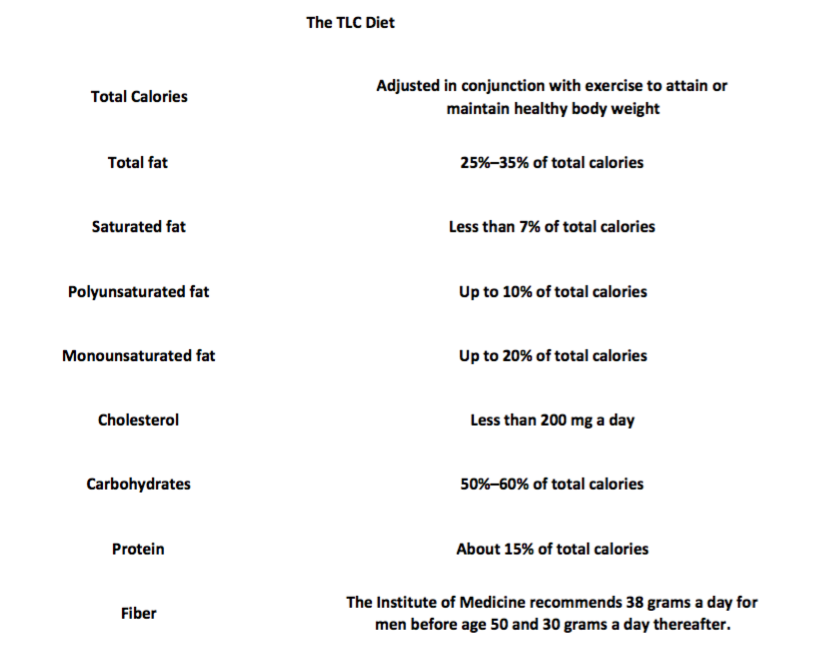
The best diet
People don’t eat nutrients, they eat food. Here are 20 guidelines for healthful and enjoyable eating.
1. Eat a variety of foods; since no single food is perfect, you need a balanced mix of foods to get all the nutrients your body requires.
2. Eat more vegetable products and fewer animal products.
3. Eat more fresh and homemade foods and fewer processed foods. Avoid fast food and junk food. You know what they are.
4. Choose your fats wisely. Cut down on meat, the skin of poultry, whole-fat dairy products, stick margarine, fried foods, processed snack foods, and commercial baked goods made with trans fat. Think about dressings, sauces, and cooking oil. Use olive or canola oil to cook whenever possible, and moisten your bread with olive oil or soft margarine. Get “good fats” from fish and nuts.
5. Choose your carbs wisely. Cut down on simple sugars; remember that sodas, sports energy drinks, and fruit juices are loaded with sugar. Cut down on highly refined products made with white flour. Favor whole-grain, coarsely ground, unrefined products. Don’t be fooled by dark-colored bread or by labels that boast of unbleached flour, wheat grain, or multigrain flour. Instead, look for whole grain as the first ingredient, and read the fine print to learn the fiber content of a portion; more is better. Learn to like bran cereal, vegetables, fruits, nuts, and seeds. Consider fiber supplements if you can’t get enough from whole foods.
6. Consume at least three cups of non- or low-fat dairy products a day.
7. Eat protein in moderation. Favor fish and skinless poultry. Experiment with soy and beans as a protein source. Aim for 5½ ounces of protein-rich foods a day; count ¼ cup of cooked beans or tofu, ½ ounce of nuts or seeds, or one egg as equivalent to 1 ounce of cooked fish or cooked lean meat or poultry.
8. Restrict your sodium intake to less than 2,300 mg per day, particularly if your blood pressure is borderline or high, by reducing your use of table salt and processed foods such as canned soup and juices, luncheon meats, condiments, frozen dinners, cheese, tomato sauce, and snack foods. Men with blood pressure above 120/80 mm Hg should aim for 1,500 mg a day, as should men above age 50.
9. Eat more potassium-rich foods, such as citrus fruits, bananas, and other fruits and vegetables. Eat more calcium-rich foods such as low-fat dairy products, broccoli, spinach, and tofu (but don’t take calcium supplements to boost your daily intake above 1,200 mg).
10. Eat more grain products, especially whole-grain products, aiming for at least 6 ounces a day. Count one cup of dry cereal; ½ cup of cooked cereal, rice, or pasta; or one slice of bread as 1 ounce. Whole grains and brown rice should provide at least half your grains; the more the better.
11. Eat more vegetables, especially deep-green and yellow-orange vegetables. Aim for at least five servings a day. Count one cup of raw leafy greens, ½ cup of cooked or raw vegetables, or ½ cup of vegetable juice as one portion.
12. Eat more fruits, aiming for at least four servings a day. Count one medium-sized piece of fruit; ½ cup of fresh, frozen, or canned fruit; or ½ cup of fruit juice as one portion.
13. Eat more fish, aiming for at least two 4-ounce servings each week. Remember to broil, bake, or grill instead of frying.
14. If you choose to eat red meat, try to reduce your intake to two 4-ounce servings per week. Avoid “prime” and other fatty meats, processed meats, and liver. Switch to chicken and turkey, always removing the skin. Be sure your meat and poultry are cooked to 160° or more, but not charred.
15. Eat eggs sparingly; aim for an average of no more than one egg yolk per day, including those used in cooking and baking. Use egg substitutes whenever possible.
16. Include seeds and unsalted nuts in your diet. Nuts have been linked to a reduced risk of cardiac death, but since they are high in calories, moderation is the watchword.
17. Use vegetable oils in moderation, favoring olive and canola oils. Reduce your intake of partially hydrogenated vegetable oils, palm oil, and coconut milk.
18. Adjust your caloric intake and exercise level to maintain a desirable body weight. If you need to reduce, aim for gradual weight loss by lowering your caloric intake and increasing your exercise level.
19. Avoid fad diets and extreme or unconventional nutritional schemes. If it’s too good to be true, it’s not true. Remember that these guidelines are intended for healthy people; people with medical problems should consult their doctors to develop individualized nutritional plans.
20. Rule of Thumb: 8×8 Rule – Drink eight 8-ounce glasses of water daily (roughly 2 liters). This is a simple baseline but may not suffice for everyone.
Making changes
To create a healthful diet, learn to think about food in a new way. Most of us were raised in an era when meat and potatoes were the American ideal. Now we know that vegetables, fruits, whole grains, nuts, and fish are best. It seems like a radical change, but it’s a return to the basic principles that served our ancestors well and that survive today as the traditional Mediterranean diet.
To enjoy a healthful diet, experiment with new recipes and meal plans. Be creative and take chances. Instead of dreading your new diet, have fun with it.
To achieve a healthful diet, change slowly. By the time you are 40, you’ll have eaten some 40,000 meals — and lots of snacks besides. Give yourself time to change, targeting one item a week. Start with breakfast, switching from eggs, bacon, donuts, white toast, or bagels to oatmeal or bran cereal and fruit. If you just can’t spare 10 minutes for a sit-down breakfast, grab high-fiber cereal bars instead of donuts or muffins. Don’t worry about cutting out coffee or tea unless they make you feel jumpy. Next, try out salads, low-fat yogurt or low-fat cottage cheese, tuna or peanut butter sandwiches, and fruit for lunch. Snack on unsalted nuts, trail mix, fruit, raw veggies, Rye Krisp, or graham crackers. Try eating a few handfuls of a crunchy fiber cereal such as Kashi, or nibble on a cereal bar. Finally, work on dinner, experimenting with fish, skinless poultry, beans, brown rice, whole-wheat pasta, and, of course, salads and veggies. Fruit and low-fat frozen desserts are examples of desirable after-dinner treats. And there’s nothing wrong with cake, pie, or chocolates as long as the portions are moderate.
To survive a healthful diet, be relaxed about it. You will never find a perfect food. Not everything on your plate needs to have a higher purpose. Take your tastes and preferences into account. If roast beef is your favorite food, it is okay to eat it — but try to make it a Sunday treat instead of a daily staple. The choices are yours — and the better your overall diet, the more “wiggle room” you’ll have to indulge your passions.
To eat for health, take a long-range view. Don’t get down on yourself if you slip up or “cheat” from time to time. Don’t worry about every meal, much less every mouthful. Your nutritional peaks and valleys will balance out if your overall dietary pattern is sound.
Healthful eating, healthful living
A good diet is one of the two keys to prevention. The other is exercise. And moderation and balance are the keys to making both work for you. You can get started simply by walking for 30 minutes a day; it sounds like a lot, but you can do it in 8- to 12-minute chunks throughout your day. And remember to climb the stairs and do yard work and household chores the old-fashioned way whenever you can.
In 21st-century America, many of us need a new way to think about diet and exercise. In truth, though, it’s not so new after all. Some 2,400 years ago, Hippocrates, the father of medicine, wrote, “If we could give every individual the right amount of nourishment and exercise, not too little and not too much, we would have found the safest way to health.”
BodyFly Nutrition
Introducing the BodyFly Nutrition Course
BodyFly Fitness is proud to present the BodyFly Nutrition Course, a comprehensive program inspired by top nutritionists with advanced degrees and proprietary methodologies. This course is designed to empower trainers with the knowledge and tools to elevate their fitness programs by incorporating evidence-based nutritional guidance.
Available exclusively on the BodyFly Fitness app, the course provides trainers with a deeper understanding of how nutrition impacts performance, recovery, and overall well-being.
Why Trainers Should Explore the BodyFly Nutrition Course
1. Unlock Advanced Knowledge
- Gain insights developed by expert nutritionists with advanced degrees.
- Access proprietary information and proven strategies to support diverse client needs, from weight management to performance enhancement.
2. Expand Your Skill Set
- Learn to integrate nutrition into your training programs effectively.
- Offer clients a holistic approach to achieving their fitness goals by combining exercise and dietary strategies.
3. Enhance Your Credibility
- Add a specialized nutrition certification to your expertise, boosting your professional profile.
- Stand out in a competitive fitness industry by offering comprehensive wellness solutions.
4. Access Proprietary Content
- Dive into exclusive content covering essential topics such as macronutrient planning, weight loss strategies, metabolic health, and more.
- Discover condition-specific strategies for fitness-focused nutrition.
Course Highlights
- Condition-Specific Nutrition: Learn how to tailor nutritional advice for weight loss, muscle building, metabolic health, and more.
- Live Expert Sessions: Engage with top nutritionists through virtual Q&A and live training sessions.
- Exclusive Resources: Get access to ready-to-use meal plans, tracking tools, and personalized nutritional templates.
- HIPAA-Compliant Information: Understand how to manage sensitive client health data with integrity and compliance.
How to Access the Course
Complete the BodyFly Trainer Certification First
- The Nutrition Course is a premium offering available exclusively to certified BodyFly trainers and users.
- After signing up, gain immediate access to the BodyFly Nutrition Course on the app.
Benefits of Adding Nutrition Expertise
- Increase your client base by offering an integrated fitness and nutrition program.
- Drive higher engagement and retention by addressing all aspects of client wellness.
- Position yourself as a leader in the fitness and wellness space with a unique, dual-certified approach.
Take the Next Step in Your Career
The BodyFly Nutrition Course is more than just an add-on—it’s a pathway to becoming a more effective, impactful trainer. Enhance your ability to transform lives and build a thriving business by combining fitness and nutrition expertise.
Ready to take your knowledge to the next level?
Complete your BodyFly Trainer Certification and unlock the exclusive Nutrition Course today!