Clients With Special Conditions, Illness or Injury
Chronic Pain
Help clients move beyond pain and resume the activities they love most
The prevalence of people enduring chronic orthopedic conditions or joint or muscle pain is high. Yearly, an estimated 50 million Americans experience chronic pain* and 8.6 million Americans are affected by injury†, often leaving them with decreased mobility, strength, or function.
Knowledgeable exercise professionals can make all the difference for these clients by focusing on their unique goals and taking a functional approach to movement. The BodyFly Program provides a step-by-step method of recognizing client needs and applying appropriate exercise and programming techniques to support client achievement. Through personalized program design, you will help clients restore their confidence in performing activities of daily living and regain an active lifestyle. Furthermore, you will understand how to effectively work with medical professionals to improve your client’s continuity of care and enhance your referral business simultaneously.
The BodyFly Certification Program provides you with the critical foundational knowledge of functional anatomy, allowing you to gain a deeper understanding of how anatomy and biomechanics apply to function. You will learn to create safe and effective programs using assessment considerations and identify appropriate exercises that can be immediately put into practice, enabling your clients to confidently resume their daily activities.
Empower clients to move in the ways that they want
Orthopedic injuries and conditions can have a devastating impact on an individual’s lifestyle. As a Certified BodyFly Trainer, you will help clients regain function and return to normal movement. You will coach clients to improve function, mobility, stability, and strength, which will lead to less pain, better health, and increased all-around quality of life. You will be equipped to work with a wide variety of clients, from those who want to jump back into an exercise regimen quickly to those who are afraid of moving and reinjuring themselves.
Training a client with a chronic injury is no small task. This is especially true if a client is injured and the injury has gone undiagnosed and, as a result, untreated. It is generally outside the scope of practice for a personal trainer to diagnose or treat an injury. Personal trainers are not, by education and license, diagnosticians or physical therapists. Rather, personal trainers are “suspect-itians.” In other words, personal trainers might have an inkling or idea of what could be causing some discomfort based on a client’s description (e.g., tendonitis, shin splints), but health and fitness professionals are not (as a general rule) qualified to say: “You have X and you need to do Y.” (Note: The exception to this rule is a personal trainer who possesses the requisite skills and licensure, such as an athletic trainer license or other acceptable certification, to operate outside of this generalization.)
It is generally considered best practice for personal trainers to refer a client with a suspected chronic injury to a treating physician who can make a second referral to an orthopedic professional, physical therapist, or athletic trainer. To remain within your identified scope of practice, do not try to diagnose or treat the suspected injury yourself. It is recommended to obtain medical clearance so that any exercise recommendation you make or program you design will not aggravate an existing condition. Use the prescribed exercises provided by the medical professional and incorporate other appropriate activities to balance the program (e.g., flexibility, and mind-body exercises).
When it comes to working with clients who have had a previous injury and/or suffer from continuous complications from an unhealed or recurring injury, there are considerations to keep in mind while staying within your scope of practice. A few of the most common injuries you may encounter include:
- Bursitis
- Fractures
- Torn muscles or ligaments
- Sciatica
- Shin Splints
- Tendinopathy
- Tennis Elbow
General Signs of a Chronic Injury
According to the National Institutes of Health (NIH), common signs of chronic injuries include pain during activity, pain or an aching sensation when at rest, and swelling at the site of injury. While there are “at-home” remedies and treatment options for acute injuries, it is advised to seek medical treatment under the following circumstances (National Institutes of Health, 2016):
- Severe pain, swelling or numbness
- Inability to place weight on the area
- Pain accompanied by increased swelling, instability, or joint abnormality
Bursitis
What is it? Bursitis is an inflammation or irritation of the bursa sacs, which are small, fluid-filled cushions situated between bones or other moving structures. Most commonly, bursitis is caused by overuse, repetitive movements, or direct injury to a joint (National Institutes of Health, 2016).
Bursitis is seen in the knees, shoulders, and the ankle, and isn’t limited to professional or recreational athletes. Certain occupational hazards or repetitive movements can place someone at high risk for bursitis. Carpenters and gardeners, for example, perform repeat motions daily and may be at higher risk for bursitis.
How is it treated? The primary goal is to reduce and stop the irritation and inflammation using a variety of protocols and anti-inflammatory medications (e.g., aspirin, ibuprofen). Protective devices are sometimes recommended by a doctor or physical therapist to help reduce irritation to the area. Some bursitis cases are caused by an infection, which needs medical attention.
As with most injuries, rest, compression, and elevation of the affected area are often suggested. Using ice isn’t as effective in resolving chronic bursitis, but may be effective for an acute injury. Any activities or exercises related to the injured area are restricted until the condition is addressed and properly treated.
What are the exercise considerations and suggestions?
- Always obtain exercise recommendations and restrictions from the client’s doctor and do not operate outside of those guidelines until the client is cleared to do so.
- Incorporate gentle stretching.
- Return to activity slowly and gradually.
- Work to strengthen the muscles of the affected joint.
- Cushion the affected area and use soft surfaces.
- Take breaks from repetitive movements.
- Stop any activities that result in pain.
- If the condition does not improve, recommend the client seek further treatment and modify the program accordingly.
Fracture
What is it? A fracture is a complete or partial break in a bone. Fractures can be stable (broken ends line up and are minimally out of place), open, compound (skin is pierced by bone), transverse (horizontal), oblique (angled fracture pattern), or comminuted (bone shatters in three or more pieces).
Fractures are caused by trauma, disease of the bone (osteoporosis), or overuse.
How is it treated? Treatment depends on the type and severity of the fracture. If a fracture is less severe, the bones are set and immobilized in a cast; more severe fractures may require surgery. Rehabilitation is often required.
What are the exercise considerations and suggestions?
- A suspected fracture needs to be evaluated by a qualified medical professional. No activity should take place before this step is completed.
- Following the healing process, activity and movement will still be limited and the muscles surrounding the injured area will likely have atrophied, requiring a restoration of both strength and flexibility.
- If the client saw a physical therapist and completed that program, obtain the exercise recommendations and implement them accordingly.
- Do not attempt to work with a client who has an active, untreated, or healing fracture unless you are working with them as part of their rehabilitative program designed by a physical therapist. Adhere to those guidelines until the client is cleared for normal activity to resume.
Muscle Tear
What is it? Muscle tears, including tears in connective tissue (think cruciate ligaments), are common injuries in both recreational and performance athletes. An individual suffering from a strained or torn muscle may present with reduced strength, bruising, swelling, and significant pain. The muscle may also appear to have a defect upon examination.
Muscle tears are classified into three categories:
- A Grade 1 tear is considered mild and involves less than 5% of the muscle fibers. There is minimal loss of strength and motion and this type of tear generally heals in two to three weeks.
- A Grade 2 tear is more extensive, but the muscle is not fully torn or ruptured. However, individuals with a Grade 2 tear experience a significant loss of strength and mobility. Healing time for this injury can be up to three months.
- The final category, a Grade 3 tear, is a complete rupture of a muscle and/or surrounding connective tissue. Injuries in this grade often require surgical repair and extensive physical or occupational therapy.
How is it treated? Treatment depends on the degree of muscle or connective tissue injury and if surgery is required. Many less-severe cases can be treated with anti-inflammatory medications and the RICE method (rest, ice, compress, elevate). If it is a mild injury, the individual can return to activity when the range of motion is restored and the pain subsides. If the injury is more severe and surgery is required, the individual will be advised to complete a physical therapy program before resuming normal/previous activities. The rate of healing can vary widely between individuals.
What are the exercise considerations and suggestions?
- Make sure the client is cleared to exercise by the treating physician and physical therapist. Most individuals who complete a physical therapy regimen will “graduate” with a list of exercises to do on their own; incorporate these into the program you design.
- Stop the exercise if the client experiences pain.
- Use exercises that target and strengthen the muscles of the affected area, but make sure the program is both balanced and comprehensive to avoid reinjuring the site and/or creating muscle imbalances in other areas.
- Follow the 50% rule: When a client is ready to return to exercise, reduce the previous volume and intensity by half. There’s no concrete recommendation that works for every client, but a conservative approach will ensure the client is safe.
- Emphasize after-session and at-home flexibility exercises. Keep in mind that the full range of motion may not be fully restored due to scar tissue accumulation at the site of injury/surgery.
Sciatica
What is it? Sciatica refers to pain felt radiating from the hip and down the back and outer thigh regions and is caused by pressure on the sciatic nerve. The culprit is usually a herniated disc. Sciatica can also be caused by a condition called spondylolisthesis, which is the dislocation of the lumbar vertebra (National Institutes of Health, 2016).
How is it treated? Treating back pain requires more than a simple “do this, not that” approach. First, it depends on what is causing the back pain. If the cause of the pain is a ruptured disc, for example, surgical treatment may be required. Other chronic back pain issues not requiring surgical intervention are treated with a combination of heat/ice, exercise, flexibility training, and medications.
Before developing programming for a client with chronic back pain, confirm the diagnosis with a doctor. The client may require an MRI or other diagnostic test that you, as the personal trainer, cannot provide. The following exercise considerations are for those clients who do not need surgery for their back pain.
What are the exercise considerations?
- Suggest water exercise to relieve pressure on the spine.
- Incorporate an adequate stretching routine to restore flexibility.
- Consult with a physical therapist for specific stretching exercises to include in the client’s program.
- Reinforce the importance of being physically active (movement reduces inflammation) and help the client find new ways to incorporate more activity throughout his or her day (limit prolonged periods of sitting and avoid excessive bending and twisting movements).
Shin Splints
What is it? While the term shin splints is commonly used to describe any lower leg pain, the most accurate description is pain experienced along the tibia (large bone of the lower leg). As with other types of injuries, this is often a result of overuse and is typically seen among runners. However, it may occur for other reasons such as improper footwear, aggressive increase in activity over a short period, poor form and technique, lack of warm-up, poor flexibility, overtraining, performing running or jumping activities on inflexible or hard surfaces, and over-pronation during running.
The pain and discomfort associated with shin splints are most often anterior (front outside section of the leg and radiates into the foot/ankle area) or medial (inner edge of the lower leg by the calf muscles).
How is it treated? After confirming a diagnosis with a doctor, the next step is to stop the activity and allow the shin to heal properly (up to two weeks). Apply ice to reduce inflammation and implement a quality stretching program targeting the Achilles and lower-leg musculature. It is also possible to wrap the leg using an ace bandage or athletic tape for some time until the pain subsides, but this isn’t likely to speed the rate of recovery. If the pain persists, it could be more than shin splints and maybe a stress fracture. Keep this in mind if your client continues to experience discomfort.
What are the exercise considerations?
- Encourage the client to confirm the diagnosis with a qualified medical professional.
- Reduce the program activity and integrate other cross-training activities (e.g., swimming, elliptical). The goal is to have the client engage in an activity that doesn’t exacerbate the discomfort.
- Suggest that the client obtain footwear that offers maximum support.
- Stretch the calves and Achilles regularly to enhance flexibility at the foot-ankle joint.
- When the client is ready to return to running (or the previous activity), start and progress slowly.
Tendinopathy
What is it? Quite literally, tendinopathy means “disease of the tendon;” however, it is a broad term used to describe the pain and tenderness at or around a tendon that occurs from overuse. It can also mean inflammation (tendinitis) and micro tears (tendinosis). The symptoms of this condition may resemble those of bursitis or tennis elbow (see following injury). The causes are often the same or similar as well (e.g., improper equipment, poor technique, repetitive movement, and not enough recovery time).
How is it treated? Most cases can be treated with at-home therapies such as rest, ice, and anti-inflammatory medications. Depending on the severity of the condition, other therapies may be required or suggested by the treating physician.
What are the exercise considerations and suggestions?
- Take a break from the aggravating activity.
- Check the client’s form and technique.
- Implement cross-training activities to prevent a recurrence.
- Emphasize a proper warm-up and flexibility routine.
- Once the pain subsides, slowly progress. If the pain returns suggest that the client follow up with his or her treating physician and physical therapist.
Tennis Elbow
What is it? Tennis elbow, or lateral epicondylitis, is persistent pain in the elbow brought on by overuse, such as the repetitive movements used in racquet sports or certain occupations such as painting, carpentry, or cooking. Clients with this condition complain of a burning sensation on the outer edge of the elbow, which is typically accompanied by weak grip strength.
How is it treated? Some cases of tennis elbow require surgical intervention. Other less severe cases can be treated with a combination of therapies, including strengthening and flexibility exercises of the forearm muscles, anti-inflammatory medications, braces, shock wave therapy, physical therapy, steroid injections, and, of course, rest.
What are the exercise considerations and suggestions?
- Encourage a break from the sport or activity that contributed to the condition. If it is occupationally related, the client may need to use a brace or seek specific treatment for his or her symptoms.
- When the client can obtain a full and pain-free range of motion, initiate strengthening exercises focused on the muscles that can stabilize the upper body and reduce strain and stress on the elbow joint.
- Emphasize strengthening and flexibility exercises for the forearm and wrist extensors.
- Incorporate some cross-training activities to keep the client from losing fitness gains.
- If the client chooses to return to tennis (or other sport or activity), suggest that he or she have their racquet and grip assessed. Injuries often result from improper use of equipment or a poor fit.
Chronic injuries are neither fun to have nor easy to overcome; however, with a strategic approach supported by the right medical guidance and proper training technique, your clients can achieve their health and fitness goals. That said, training a client with a chronic injury requires more time and patience on both the part of the personal trainer and the client. It may be frustrating at certain points along the training continuum, but the key is working through those frustrations together, using open and honest two-way communication, and continuing to consult with the primary care physician, physical therapist, or athletic trainer. Although it is not within your scope or practice as a personal trainer to cure or rehabilitate an injury, it is, however, your job to safely and effectively apply the exercise guidelines, recognize contraindications, and know when to refer to a more qualified health professional. Stay within your scope and stay committed to providing quality services.
Active Aging
As a health and exercise professional, incorporating exercises into your clients’ programs that can aid in fall prevention is essential. Here are a few more sobering statistics that support the need for specialized strength training:
• Older adults experience approximately 400,000 fractures per year due to falls.
• More than 20% of hip fractures result in death within one year following the injury.
• By 2030, 25% of Americans will be older than 65 years.
Even among relatively fit and healthy elderly individuals, falls are common, and the consequences of falls are known to contribute substantially to the prevalence of health problems, health care costs, and lowered quality of life. Additionally, confidence and fear of falling are key contributors to reoccurring falls.
When working with active agers, the goal is to develop programs that boost confidence, while progressing clients’ movement patterns to address any losses in strength, balance, somatic senses, and power. As a result, these physical improvements may lead to an enhanced quality of life.
Ideally, training for strength and balance should begin before the risk of falls begins to increase. For this reason, strength and balance training is important for everyone—not just older adults.
How to Use the BodyFly to Increase Strength and Balance in Active Agers
The BodyFly is a convenient and accessible method of training, in part because it can be used just about anywhere. The BodyFly offers “real-time” feedback by providing a proprioceptively rich environment for the participant, while also offering a sense of safety and assurance, which can help increase the exerciser’s confidence. By holding on to the handles when performing movements, clients who struggle with balance may feel more at ease, which will allow for a more productive learning experience.
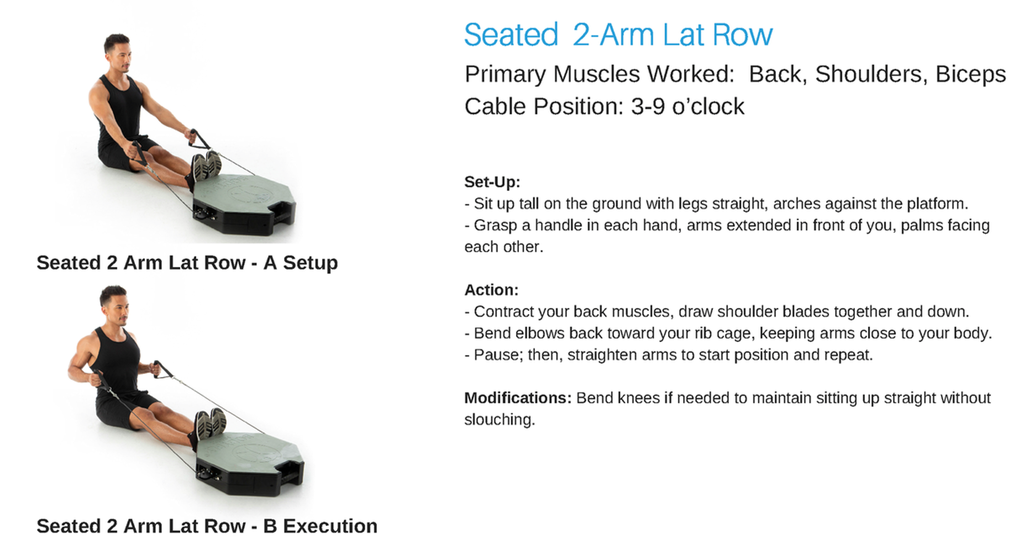
Here are a few BodyFly exercises to incorporate into your clients’ programs. These exercises challenge balance and build strength, dynamic movement, and mobility. Additionally, these exercises also target the core, which is essential to maintaining mobility and reducing one’s risk of injury.
The Exercises
Perform each of the following exercises only as long as the movement stays strong and is not compromised.
Side to Side Push-Off Squat

BodyFly Squat

Lunge to Knee Pulldown

Reverse Lunge w/ a Knee Lift

Stationary Side Lunge

BodyFly Row
BodyFly Cable Cross Bent-Over High Row

BodyFly Half Kneeing Incline Chest Press

BodyFly Rotation Lift

BodyFly Single Knee Lift Hop 30/30

Working with wheelchair users
As a wheelchair user, getting active will bring you important health benefits and can help you manage daily life, too. Regular aerobic exercise – the kind that raises your heart rate and causes you to break a sweat – and muscle-strengthening exercises are just as important for the health and well-being of wheelchair users as they are for other adults. Whatever your preferences and level of physical ability, there will be an activity or sport for you. Physical activity does not have to mean the gym or competitive sport, though these can be great options. Activity can take many forms and happen in many places. To improve your health, try to choose activities that improve your heart health and muscle strength.
For general health, all adults aged 19 to 64, including wheelchair users, are advised to do:
- at least 150 minutes a week of aerobic activity, plus
- strength exercises on 2 or more days a week
Do not worry about hitting these targets straight away: it’s more important to do something active that you enjoy.
Why you should get active
Regular physical activity is good for physical and mental well-being and can be a great way to meet new people. Using a wheelchair can make it more difficult to do cardiovascular physical activity that raises your heart rate. Maneuvering or pushing a wheelchair can also put particular pressure on certain muscles in the upper body, making strains or other injuries more likely. Muscle-strengthening exercises can help you manage your wheelchair in daily life and avoid these kinds of ailments.
What kind of activity?
The kind of activities that are right for you depend on your level of physical ability and the types of activity that appeal to you. Your aim might be to improve certain aspects of physical function to help with daily life. Or you may be seeking improved fitness or involvement in competitive sports. Whatever your level of physical ability and confidence, there are activities you can do to improve your fitness.
Cardiovascular exercise
There’s a range of options available for taking cardiovascular exercise in a wheelchair. The aim is to raise your heart rate and be warm enough to break a sweat. You should be slightly out of breath: enough that you can still hold a conversation, but not sing the words of a song. If you’re unused to exercise or you have not exercised for some time, aim to start with 10-minute sessions and gradually build up towards 20 minutes.
Activity ideas:
- swimming
- sitting exercises
- wheelchair workout
- wheelchair sprinting – in a studio or at a track
- using a rowing machine adapted for wheelchair use
- wheelchair sports such as basketball, netball, and badminton
Muscle-strengthening exercise
When it comes to muscle-strengthening exercises, you should pay special attention to certain muscle groups. The repeated pushing motion used to push a wheelchair means that the chest and shoulder muscles can become tight and prone to injury. Meanwhile, the back muscles, which are not involved in this pushing motion, can become weaker because they are never worked. Because of this, it’s a good idea to focus on exercises that work the smaller muscles that support the pushing motion, such as the shoulder muscles. This can help prevent injury. You can also strengthen the back muscles by doing exercises that involve a pulling motion, such as a pull-up. Gyms with equipment adapted for wheelchair users are great places to do muscle-strengthening activities. Some wheelchair users also find they can do muscle-strengthening exercises at home using resistance bands.
Get started
There are various ways to learn more about activities that are right for you and find local facilities.
- Parasport is an organization dedicated to helping disabled people get involved in sports – use the Parasport self-assessment wizard to find the right sports for you.
- The Activity Alliance runs the Inclusive Fitness Initiative (IFI), a scheme that ensures gyms are suitable for use by people with disabilities. Find a local IFI gym at the Activity Alliance website.
- Your local recreation center must ensure it provides access to wheelchair users, according to the Disability Discrimination Act. If you have questions about your local recreation center, such as what specialist equipment they have or whether there are special sessions for wheelchair users, call ahead and ask.
Special situations
Exercise Professionals may work with clients with special conditions, illnesses, or injuries. These resources provide advice from the experts.
How to Modify Programs for Clients and Athletes With Injuries
Three Key Elements to Successfully Training Children with Autism